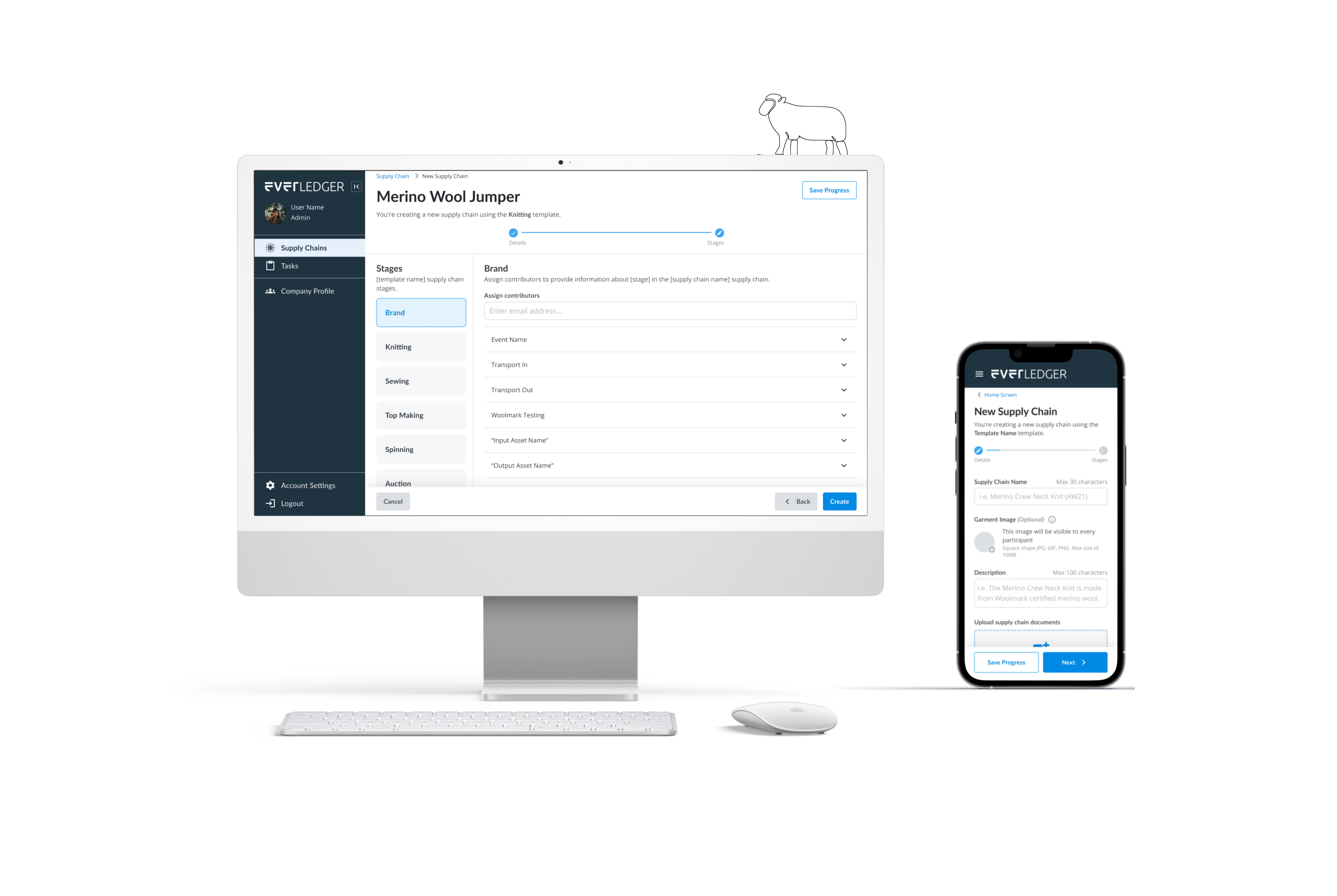
Improving B2B supply chains for data transparency
Everledger's Supply Chain Builder was born out of the need to tackle the unique challenge of tracking sustainable materials' provenance in complex supply chains, with a customisable, agnostic tool that ships transparency to responsible-sourcing managers.
Everledger’s Supply Chain Builder project was born out of a need to tackle the unique challenge of tracking sustainable materials’ provenance in complex supply chains. The team’s goal was to expand their existing platform to provide greater transparency and empower users to make informed decisions about their products.
To achieve this, the team worked closely with customers to develop a proof of concept, which led to the successful launch of phase 1 of the Supply Chain Builder. This customisable tool helps customers track and trace their materials, validate their claims, and promote responsible sourcing practices, all while ensuring transparency, compliance and trust throughout the supply chain.
Problem
The complexity of global supply chains poses a significant challenge in tracking the origin and movement of materials from source to end product. This can result in a lack of transparency, which makes it difficult for responsible sourcing managers to ensure that materials are ethically sourced and produced sustainably throughout the entire supply chain.
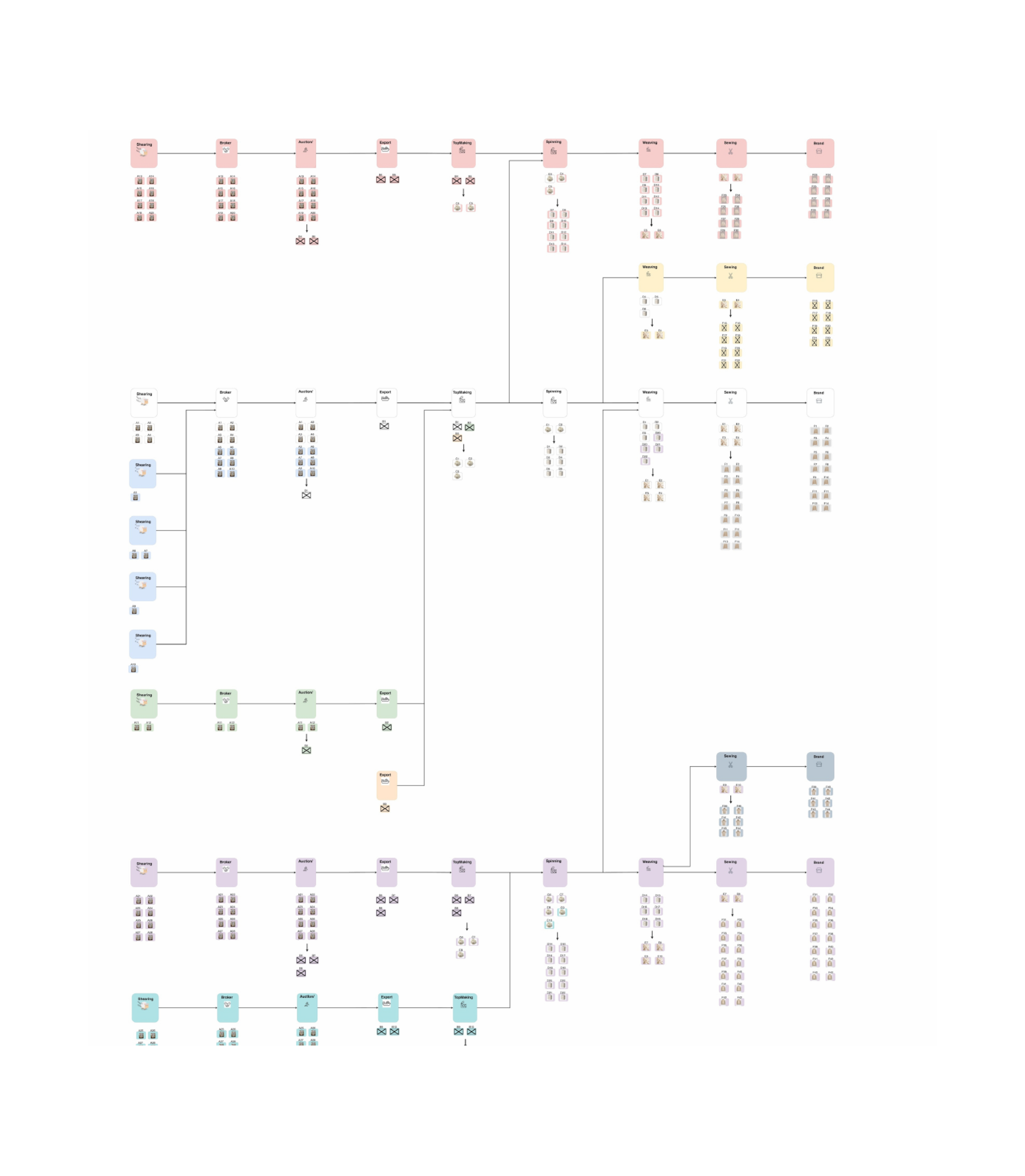
This is the challenge that the Supply Chain Builder project aimed to solve. This project created a tool that allows companies to trace 100% of their materials, along multiple supply chains at the same time and make claims in line with sustainability drivers, promoting responsible sourcing practices and providing greater transparency in the entire supply chain. To support scalability and accommodate various business needs, the Supply Chain Builder was designed to be fully customizable. This means that companies can configure the tool to fit their specific supply chain requirements and seamlessly integrate it with their existing ways of working.
Unraveling the wool industry

The wool industry is complex and tracing wool from farm to garment can be challenging. In this project, I took a user-centered design approach to address this challenge. I began by conducting research to empathize with all participants in the supply chain, focusing on the main users, clothing brands.
By breaking down the process of tracing wool and identifying pain points, I was able to conduct primary research in collaboration with Australian Wool Innovation to gather insights on the specific needs and goals of responsible sourcing managers in the wool industry.
Analysing complex user ecosystems
Our team dove deep into the world of sustainable fashion to gain a comprehensive understanding of the needs and motivations of the different players in the supply chain. We began by conducting in-depth interviews with clothing brands who wanted to ensure their claims of sustainability were backed by traceable, verifiable data. We also reached out to the various participants in the supply chain, including farmers, to understand their perspectives on the process and the information required of them.
During our research, we discovered a fascinating insight. While most players in the supply chain had little motivation to add data, farmers were excited to demonstrate the sustainability of their land. This gave us a crucial understanding of what drives each player in the chain and allowed us to craft a solution that would benefit all involved.
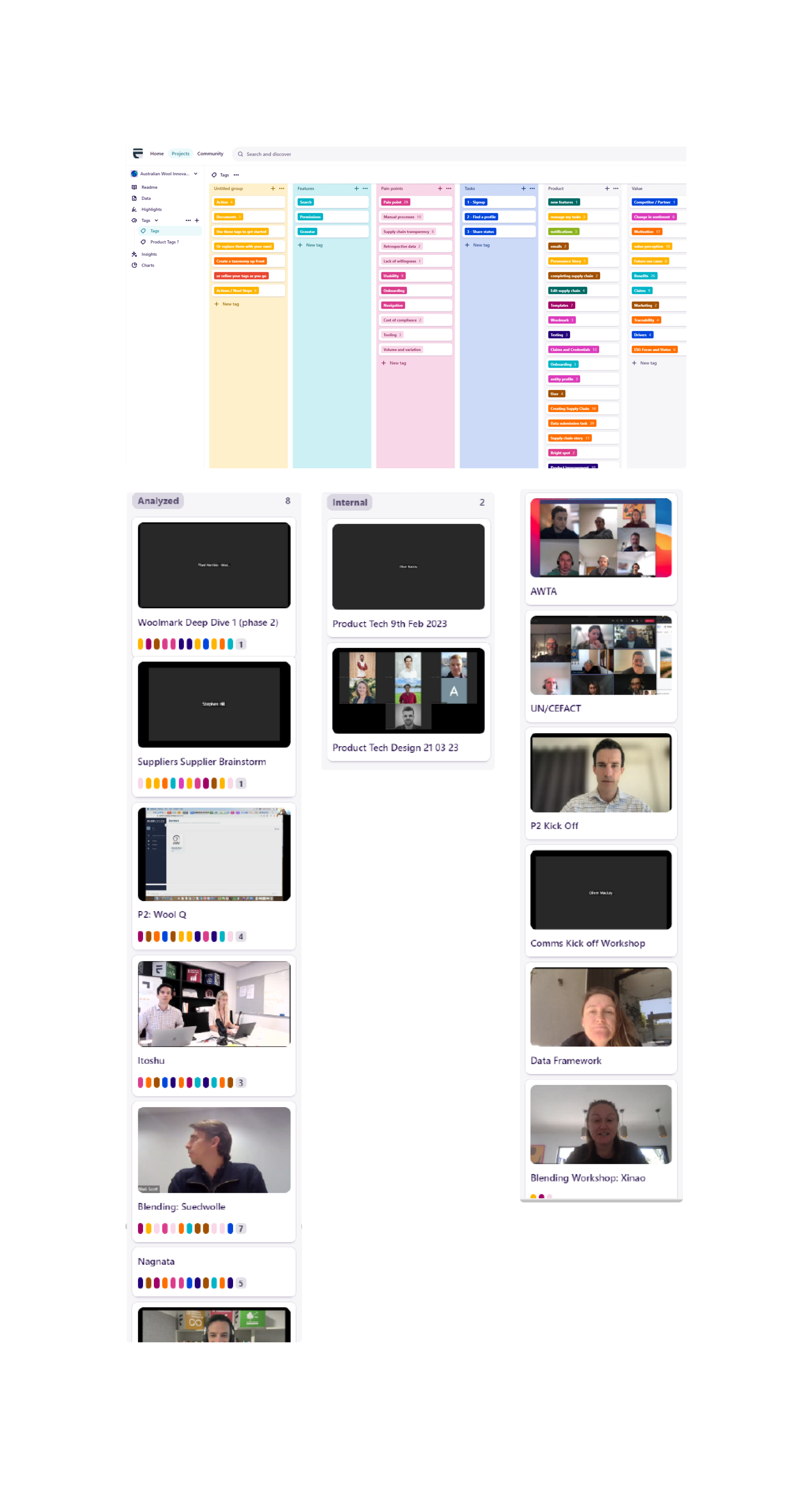
To ensure our design decisions were in line with the needs of the end consumer, we created a compelling story of each product’s journey from the farm to the final garment. This would include information about the materials used and the efforts made towards sustainability. Our client, Australian Wool Innovation, provided invaluable insight into the needs of the users, and our interviews with the primary user groups allowed us to further empathize with their needs and tailor our solution accordingly.
Simplifying intricate problems
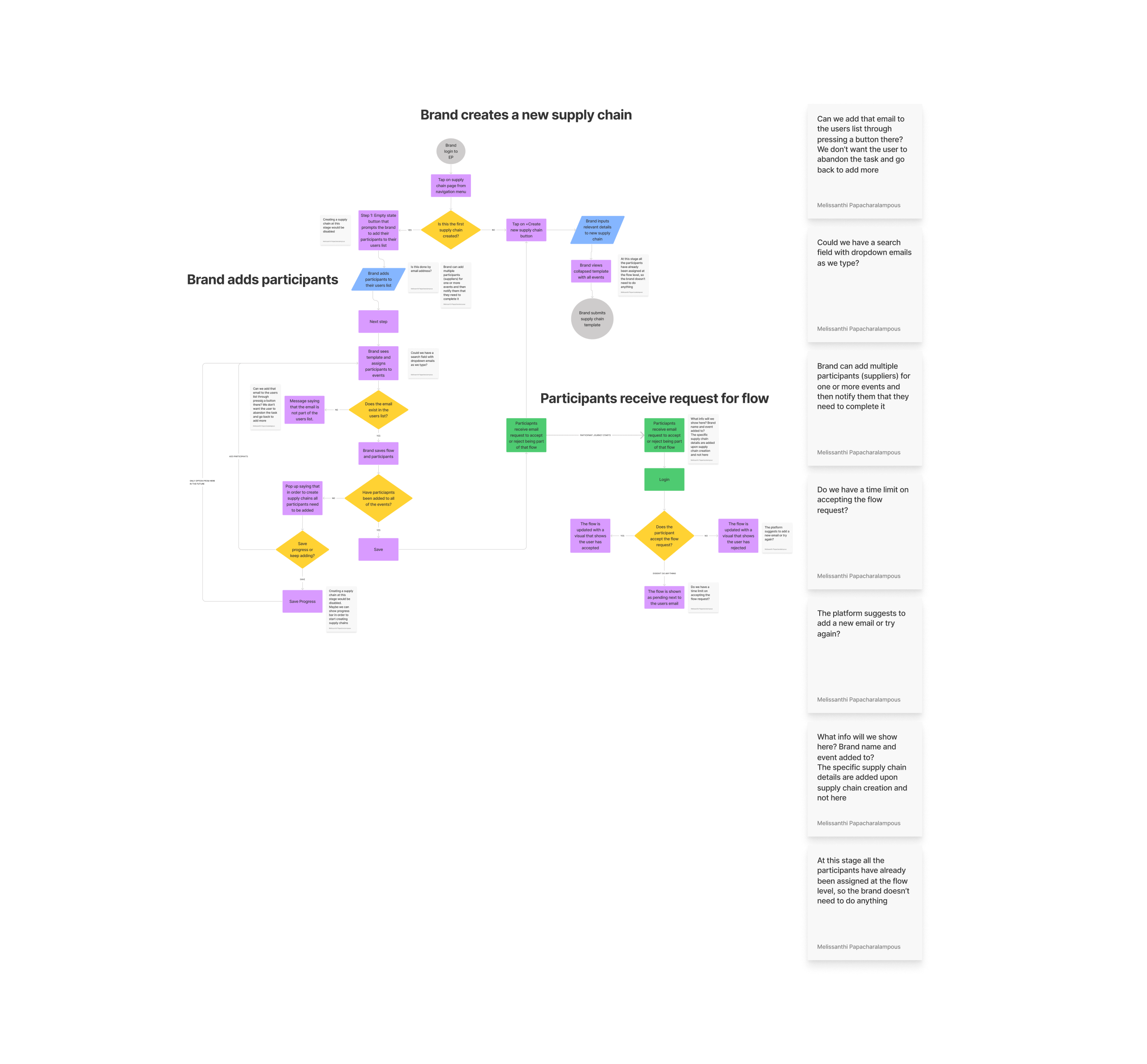
Breaking down complex design challenges is no easy feat, but that’s exactly where my team and I excelled in. We started by working closely with the product owner to define the goals and objectives of the project, and then began to break down the big problem into smaller, more manageable pieces.
We developed multiple user flows and collaborated closely with engineers to make sure we were on the right track. Throughout the process, we were constantly exploring new ways to simplify the user experience and make the supply chain more transparent with the use of blockchain.
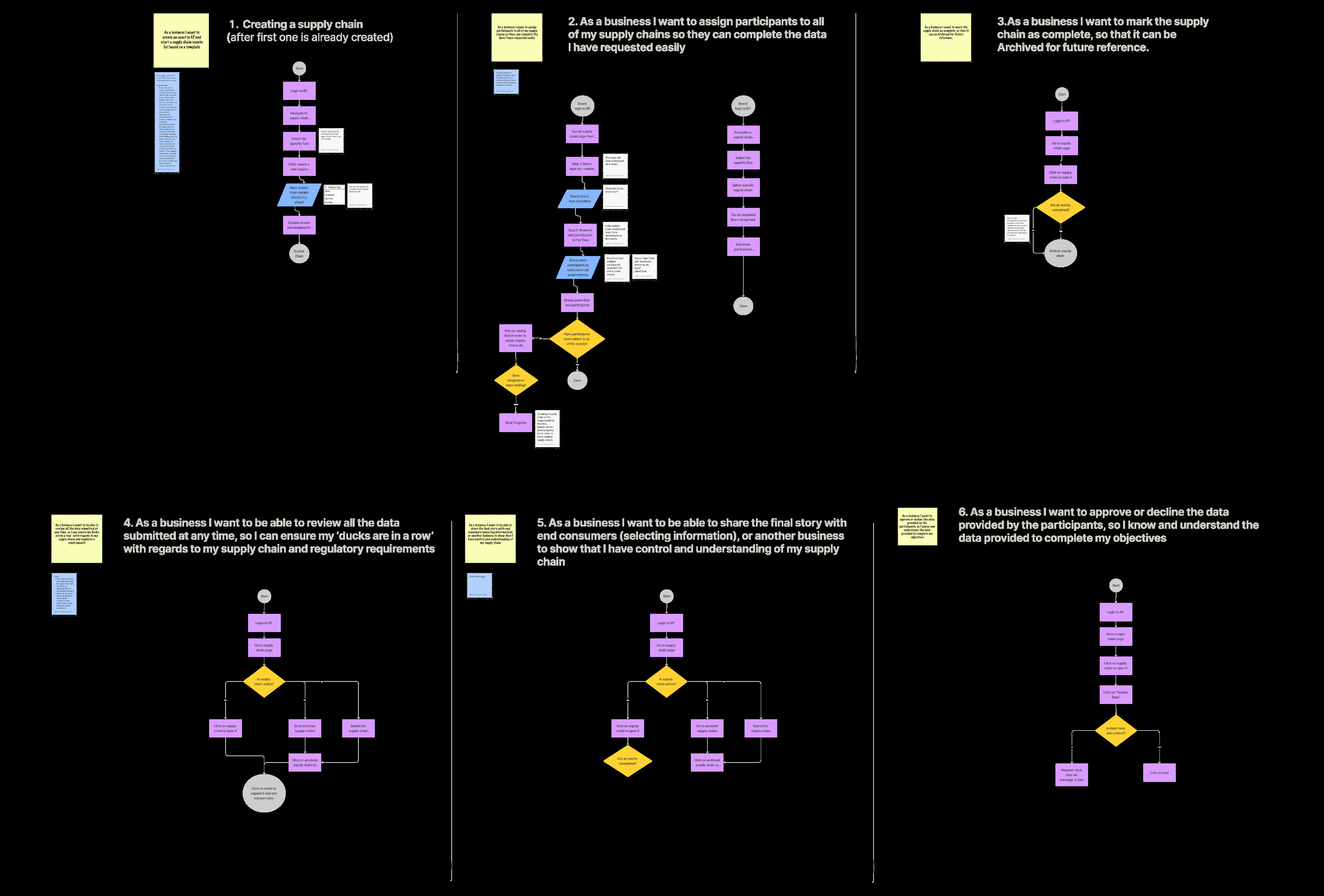
Our team then worked closely with product and tech to prioritize the features for our Proof of Concept in Miro. We took into account the requirements of our client, our business needs to ensure that the supply chain builder fits within our Everledger platform and our other verticals, as well as the needs and pain points of the users.
After several rounds of brainstorming, ideation, and collaboration, we selected the most impactful features for our Proof of Concept in Miro. We made sure that the platform allowed our users to easily familiarize themselves with the supply chain and invited participants to add data in a simple, task-based format.
Sketching & ideation
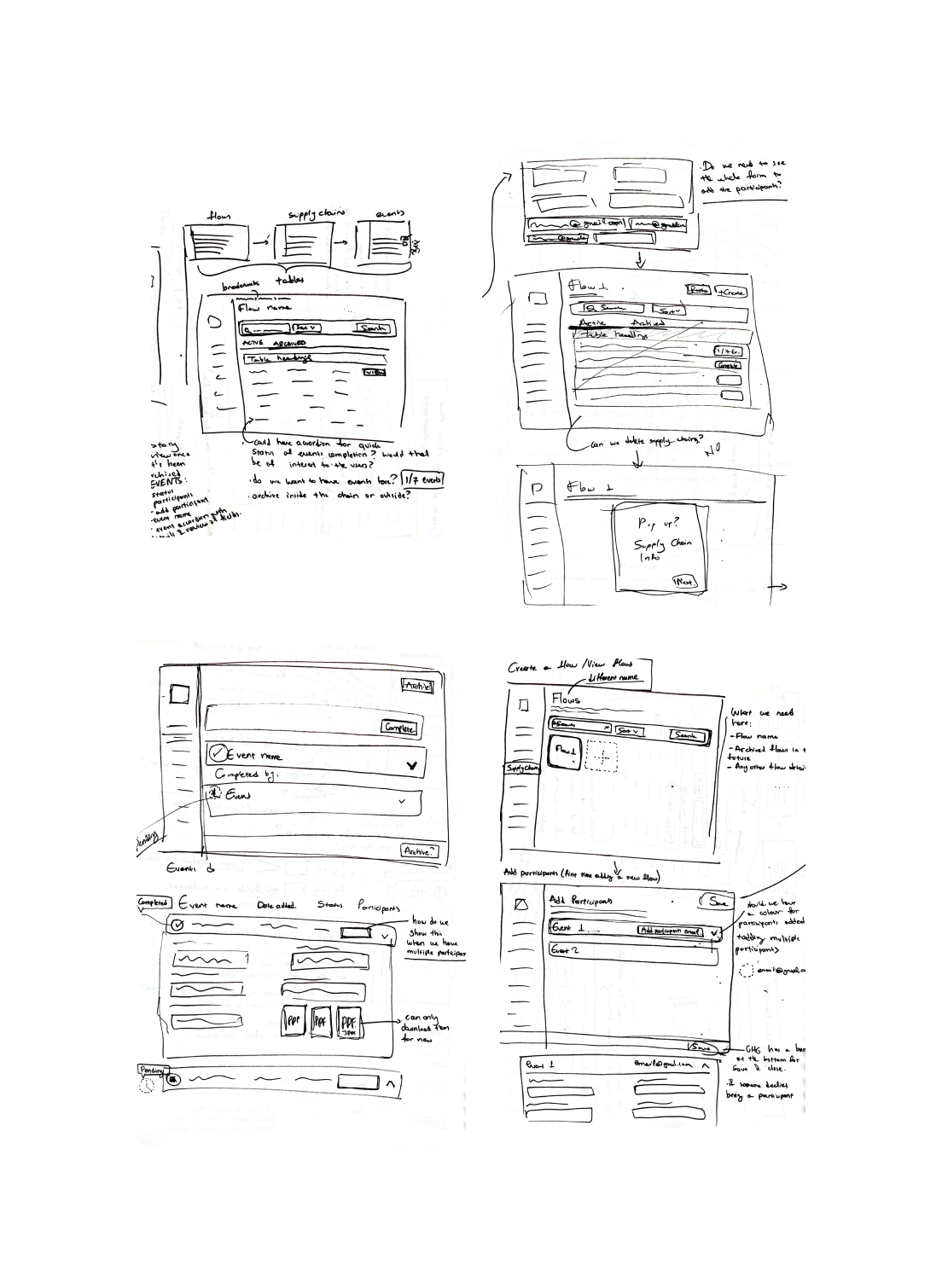
As I delved into the design process for the Proof of Concept, I knew that simplifying the data entry process for participants in the supply chain was crucial to ensure the accuracy of the information. With this in mind, I worked closely with our product and tech teams to brainstorm ideas that would encourage users to add data in a simple and straightforward manner. After several rounds of ideation and iteration, we arrived at a solution that allowed users to enter information in a task-based format that mimicked their natural flow of work.
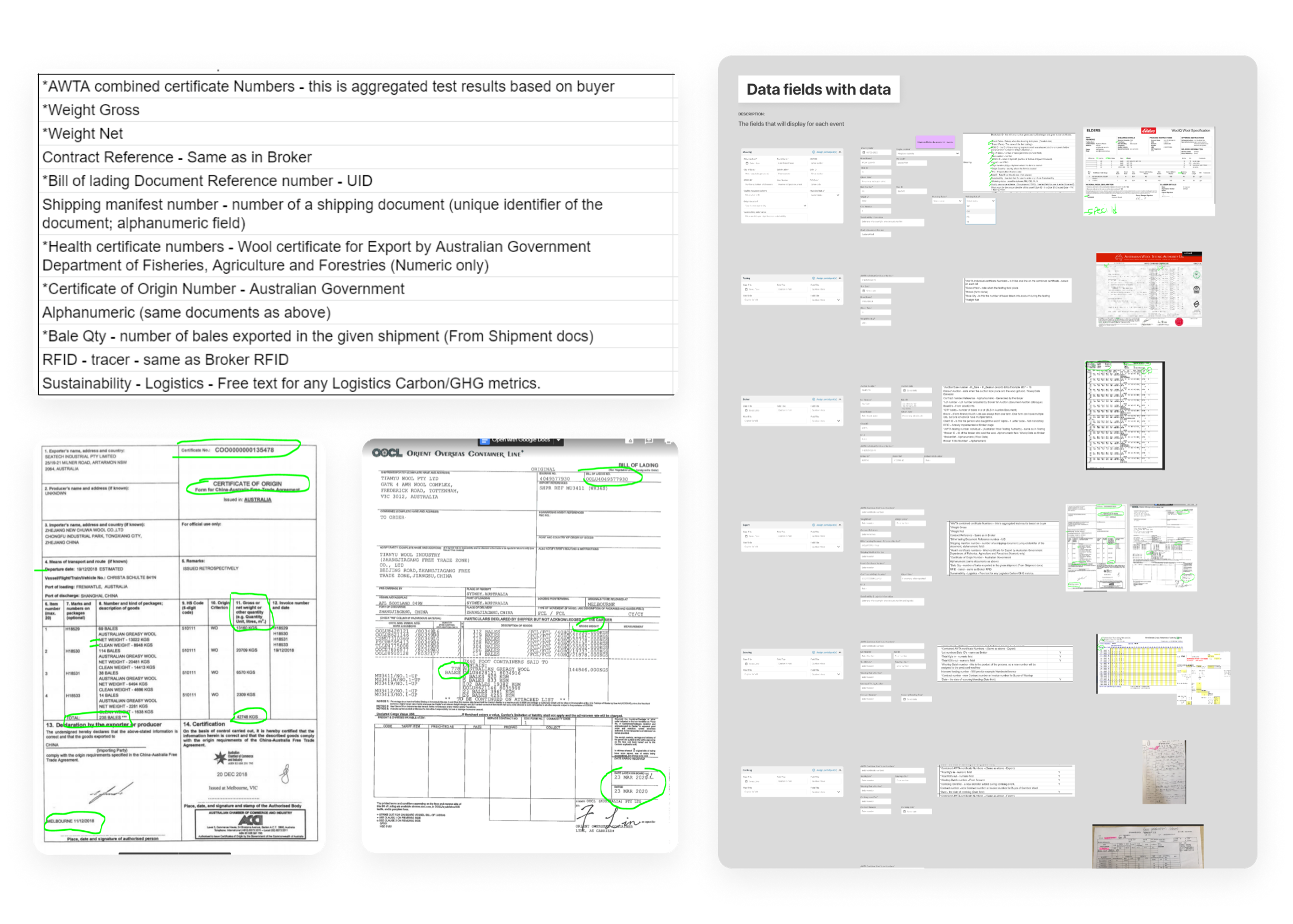
To ensure the effectiveness of our design, I scrutinized the documents that participants would need to refer to for relevant information. By analyzing their work processes, I created a user-friendly approach that would enable them to enter data in the same order as they would scan the documents.
Mid-fidelity & prototype testing
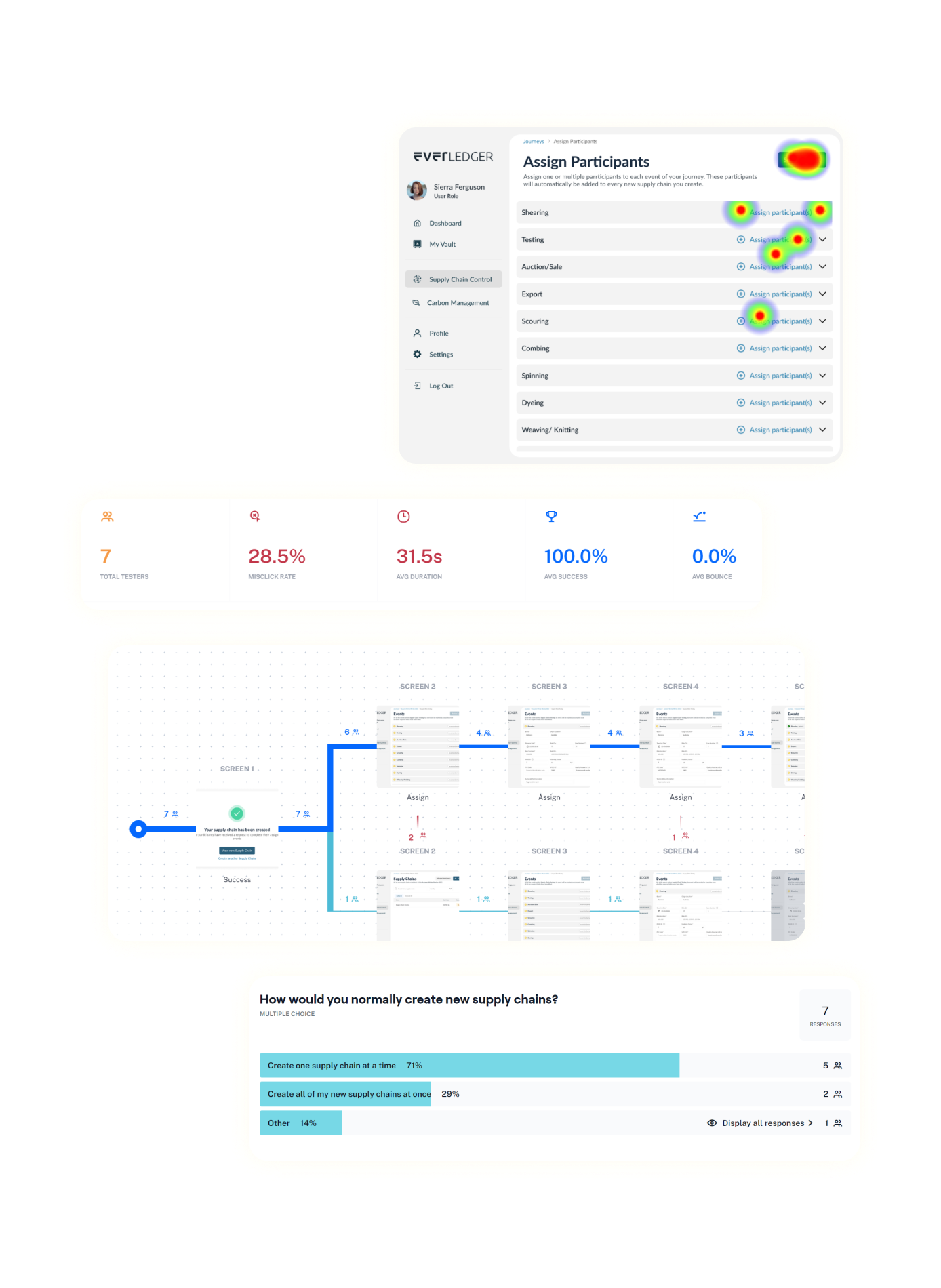
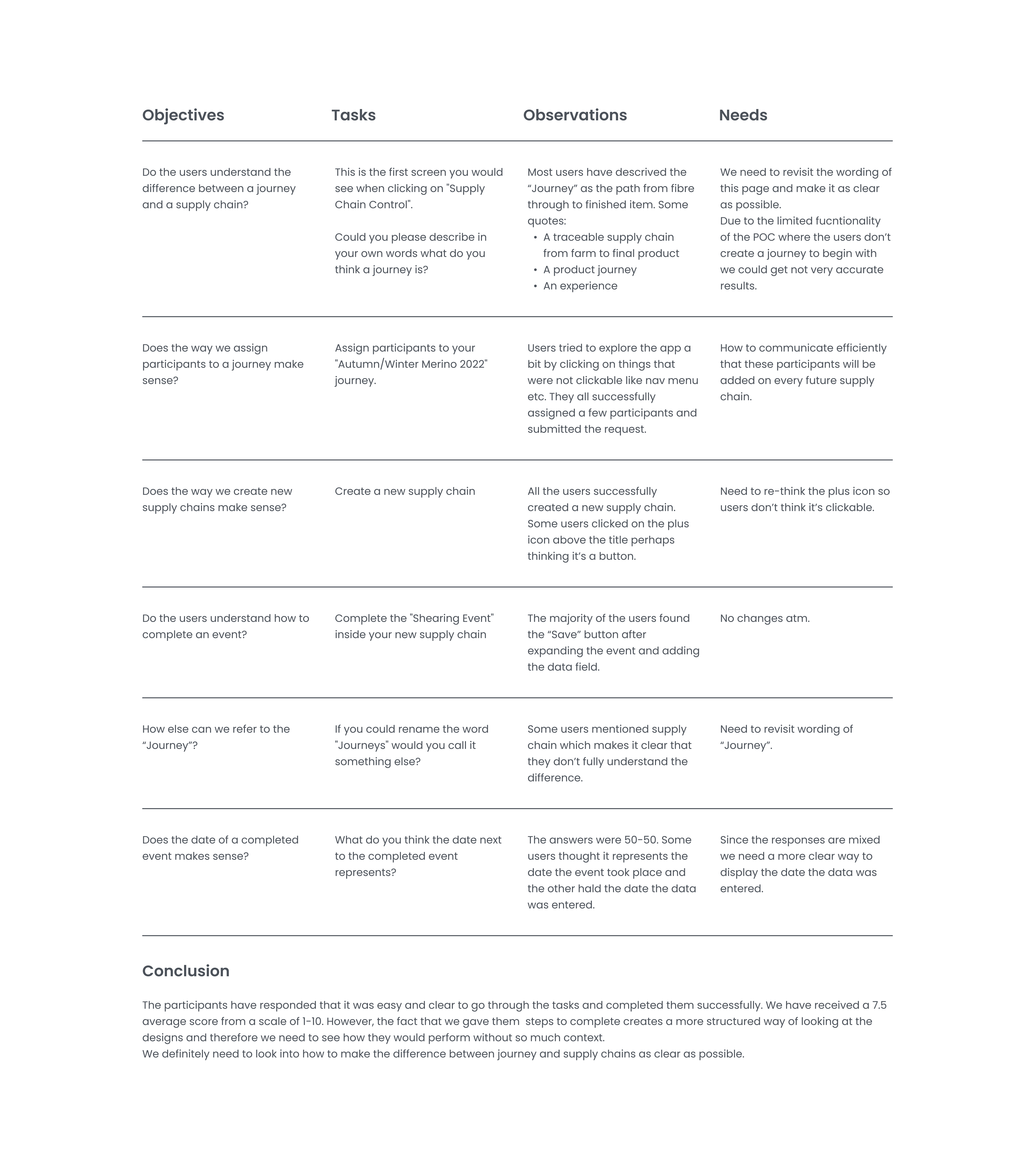
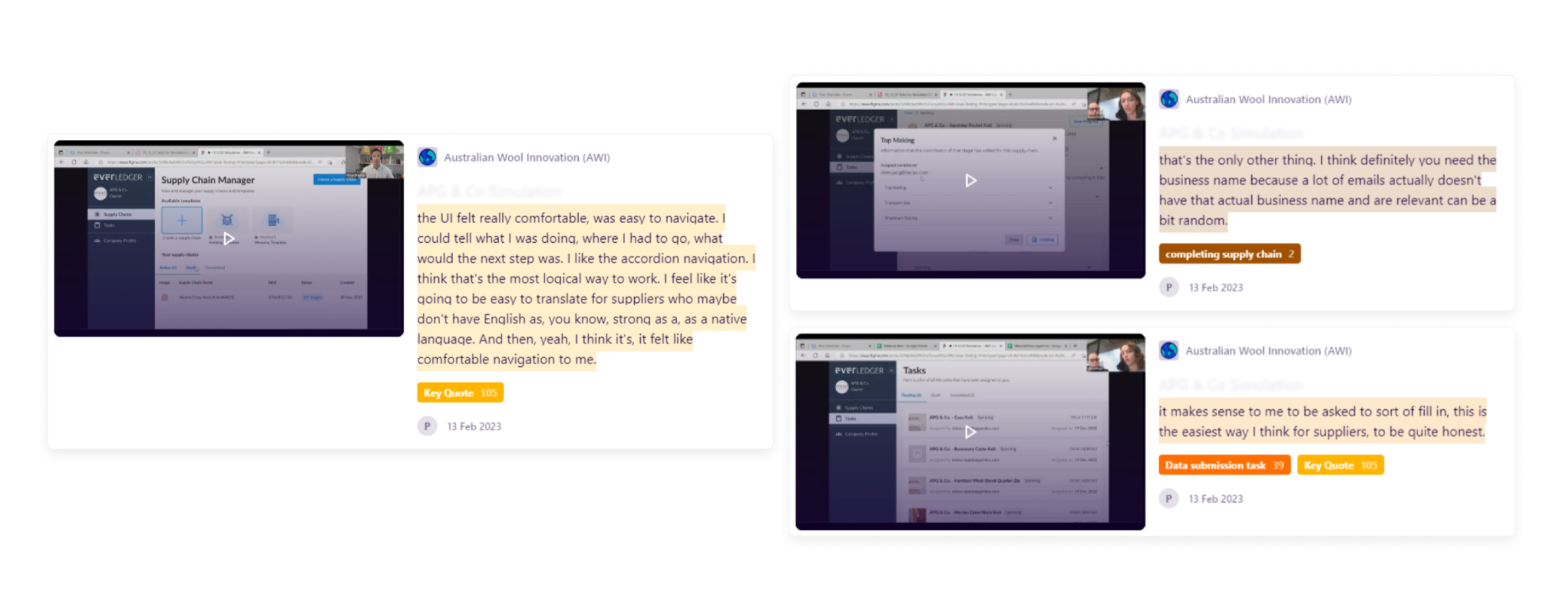
To ensure that we were creating a platform that met the needs of our users, we knew that we had to test and validate our design concepts before passing them on to the development team. After creating multiple mid-fidelity designs and a prototype in Figma, I used Maze to test them with our future users. Our objective was to determine if users could easily create new chains, understand the copy, and complete the tasks we had set for them.
Through testing, we gained valuable insights that allowed us to refine our design further. After several rounds of iteration, we finalized our high-fidelity designs and passed them on to the development team for implementation.
Final PoC designs & usability testing
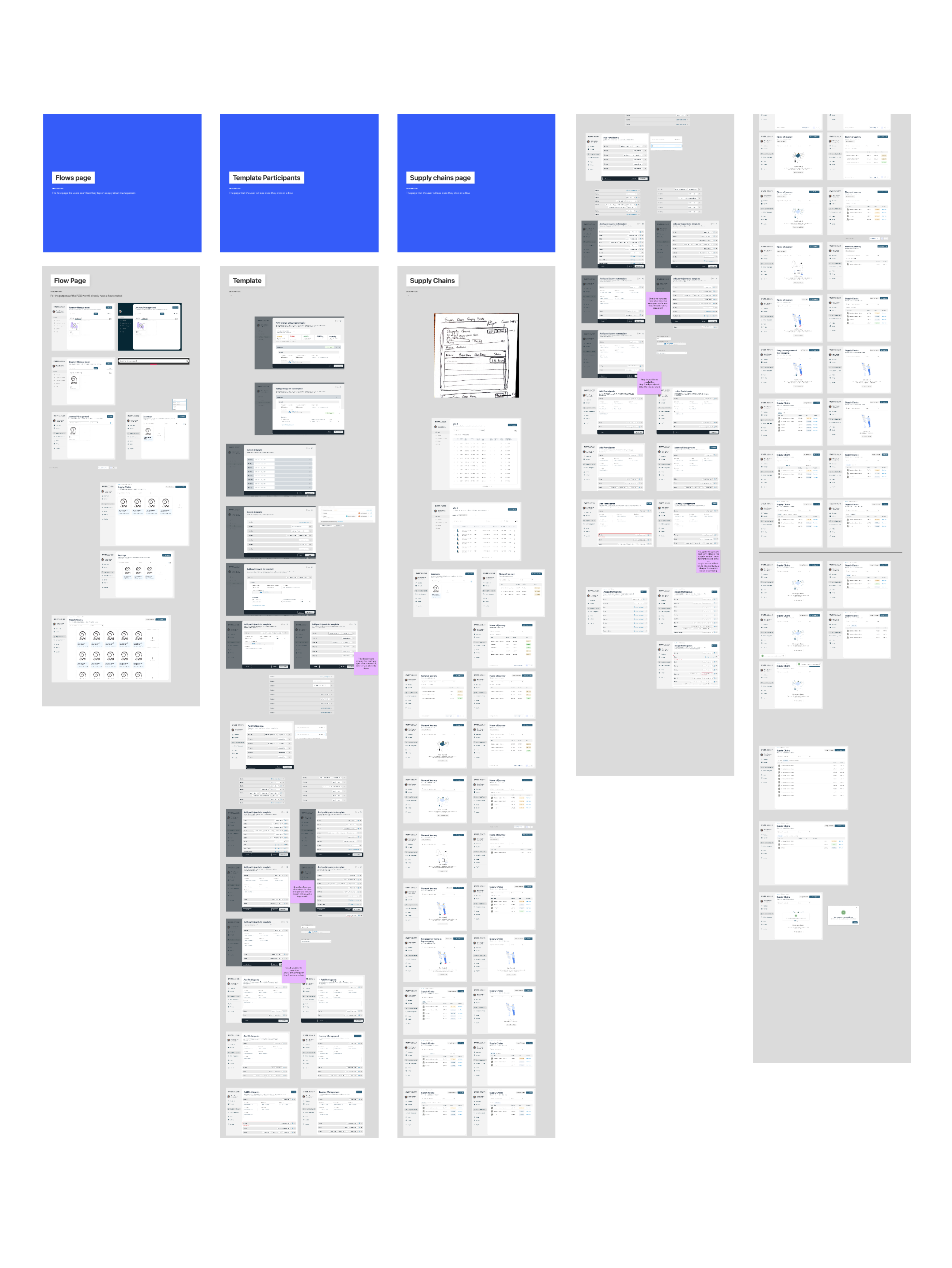
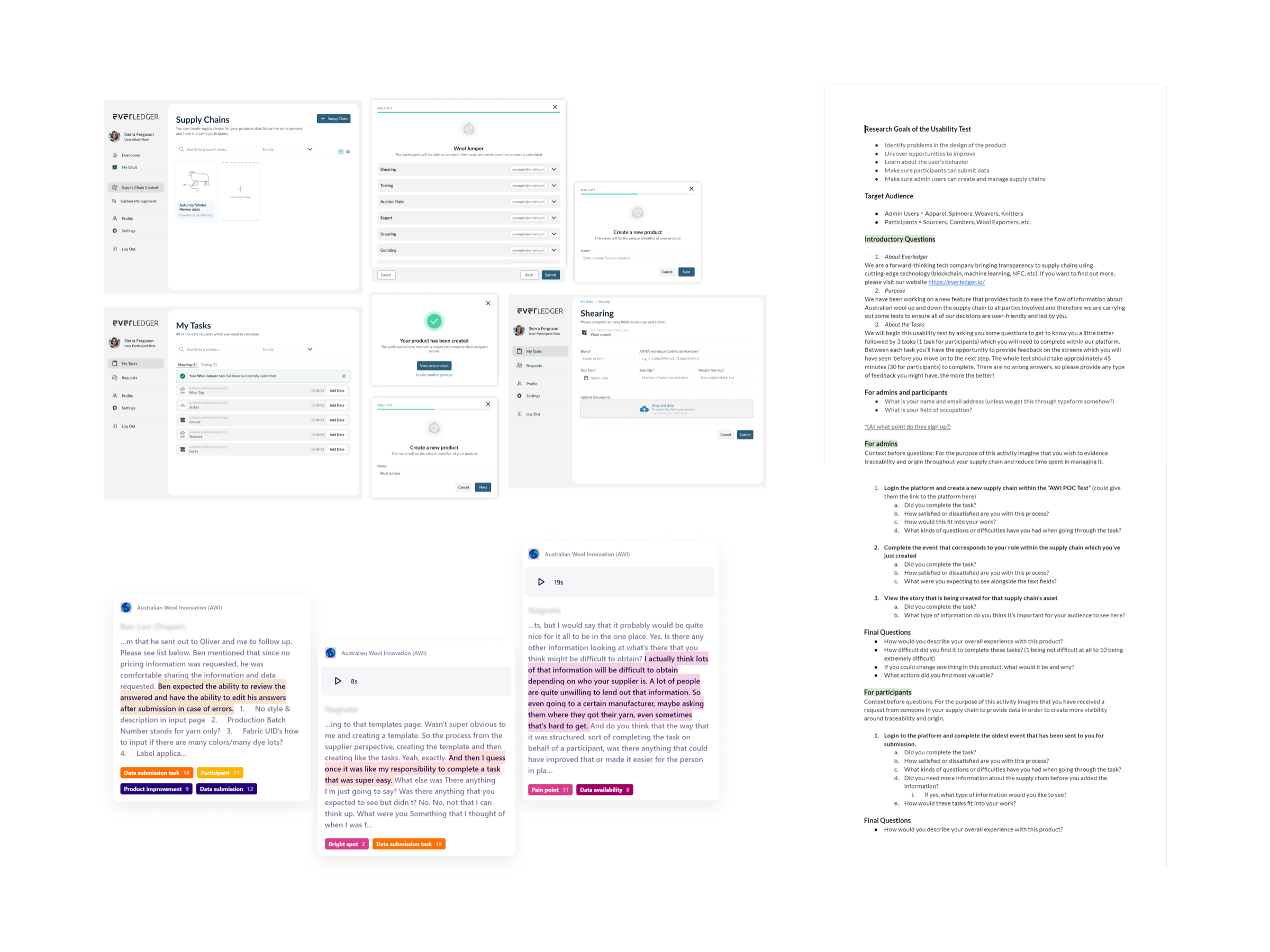
After completing the prototype testing, I moved on to create the final hi-fi designs, paying attention to every detail to ensure a seamless user experience. I collaborated closely with the developers to ensure that the designs were implemented correctly, constantly iterating based on their feedback and did Design QA throughout development. I also worked with the product team to create a testing plan, outlining the metrics we would use to determine the success of the Proof of Concept. This allowed us to quickly identify areas that needed improvement and to implement changes in the first phase if the PoC was successful.
PoC successful
After the successful completion of the Proof of Concept, we identified areas for improvement to enhance the user experience and to ensure that the platform would cater to different industries beyond wool. We collaborated with the product and tech teams to create a plan for Phase 1, which included adding more features to the supply chains such as customizable templates and a dashboard which would add value to the participants.
We would need to make sure that the builder was agnostic and could be adapted to various industries, ensuring that the platform was scalable and future-proof. Through this process, we learned the importance of flexibility and adaptability in creating a supply chain tracking system that could meet the evolving needs of different industries.
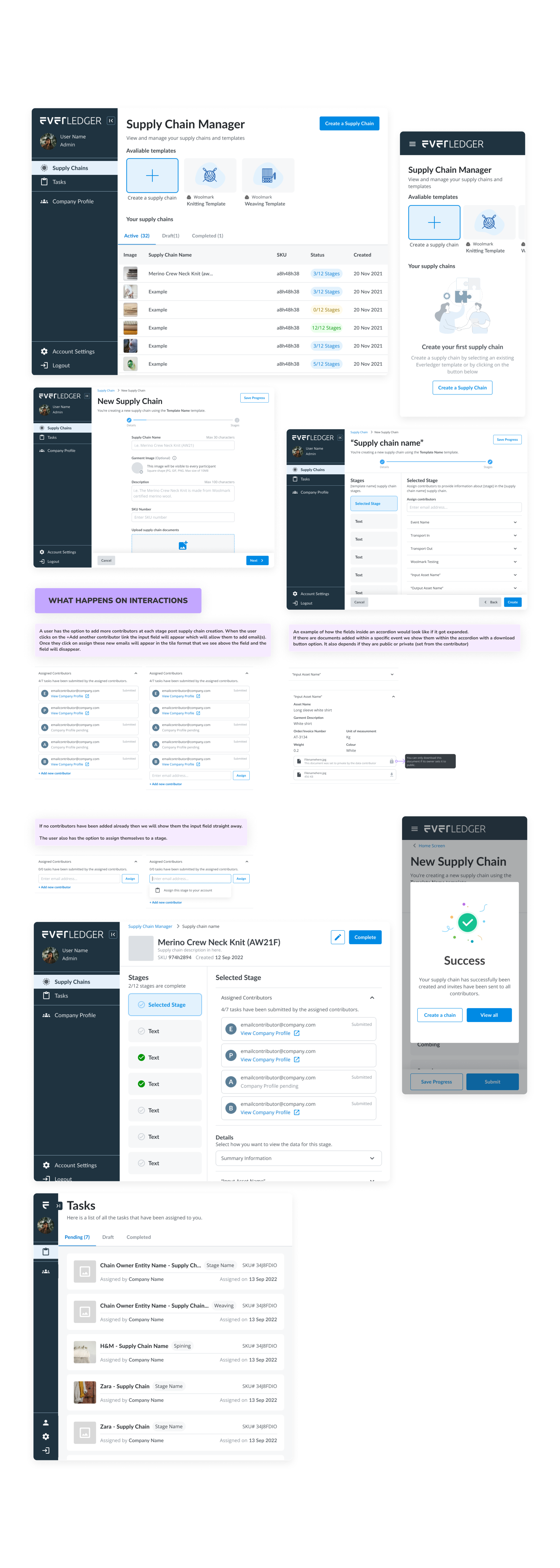
Phase 1 high-fidelity designs
Following the testing phase and collaboration with the product team, we identified which changes were a priority for implementation and which could be added to the backlog for future releases. Using this information, I created final hi-fi designs that were responsive and included detailed specifications.
To ensure the successful implementation of the designs, I held multiple handover workshops with the developers. These workshops facilitated communication and ensured that everyone involved had a clear understanding of the designs and their specifications.
Conclusion
The Supply Chain Builder was a challenging but rewarding experience. The complexity of the software required extensive collaboration with the product team, business analysts, and developers to ensure that the final product met the needs of all stakeholders. It also required us to think beyond just the initial use case of tracking wool and create a system that was agnostic and customizable for other verticals.
The extensive workshop sessions with the team allowed us to generate solutions that would have been impossible to achieve otherwise. In a world where technology is constantly evolving and becoming more complex, this project demonstrated the importance of staying flexible and adaptable in order to achieve success.